

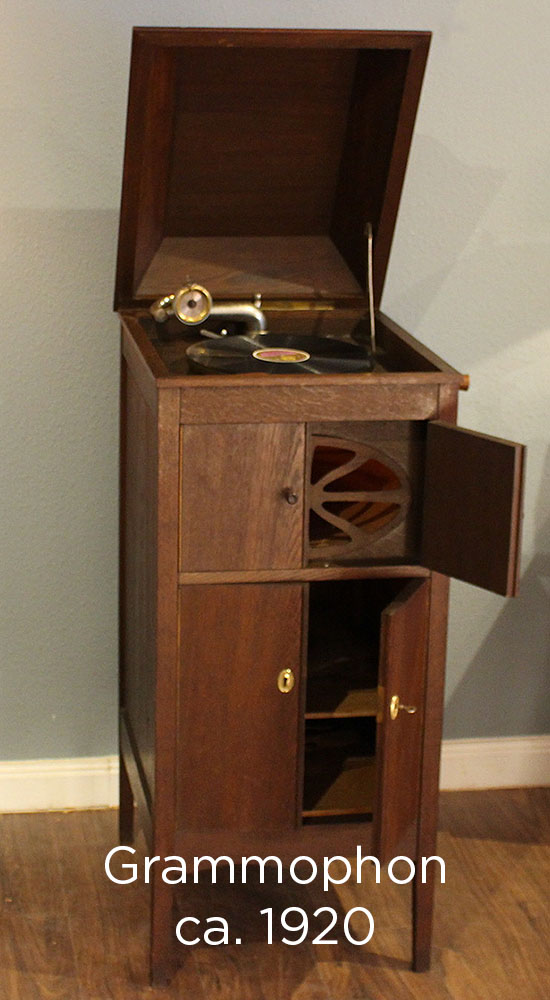
 The development of audio and video technology in the 20th century was enormous. In the audio sector, we have moved from the crackling sound of shellac records to digitized perfection, where our ears no longer perceive any disturbance.
Human "sensors" (ears and eyes) have limits. For example, we cannot perceive sounds above 20,000 Hz, nor can we hear very quiet sounds, while loud sounds cause pain. These were the very problems that sound technology had to address. Frequency response, noise, and dynamics were the major challenges in the early days of sound technology. Neither the volume nor the achievable frequencies were even remotely close to the capabilities of our hearing.
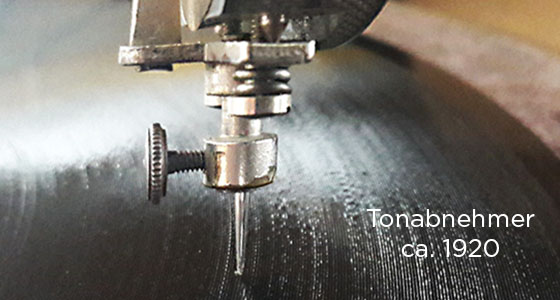 On a shellac record, only a narrow frequency band (approximately 100 - 3000 Hz) could be reproduced. The system-related noise of the record (caused by the steel needle sliding in the groove) was annoying, and the volume was also limited due to the system.
Technical development made a huge leap forward in the 1950s when the introduction of vinyl records, combined with electric pickup systems, allowed for much more precise recording and playback. The achievable frequency response expanded visibly both downward and upward. With the introduction of the audio CD in 1983, the transferable sound range reached the limits of human hearing for the first time. Today, the latest devices can reproduce music in such a way that our hearing can no longer keep up. Both the dynamics and the frequency range now far exceed the capacity of our hearing organs. This means that, although we can continue to develop technology, our hearing is no longer able to keep pace.
A similar development has occurred in the video sector. It took just a century to evolve from bumpy black-and-white films to today’s super high-resolution digital recordings. After the Second World War, everything—really everything—developed at such a rapid pace that today, our ears and eyes are the limits, no longer the technology. During this time, the world of sound production, and thus the organ, also developed just as quickly. From the purely mechanical instrument at the beginning of the 20th century, to the first attempts to produce sounds with electricity, to the digital organ.
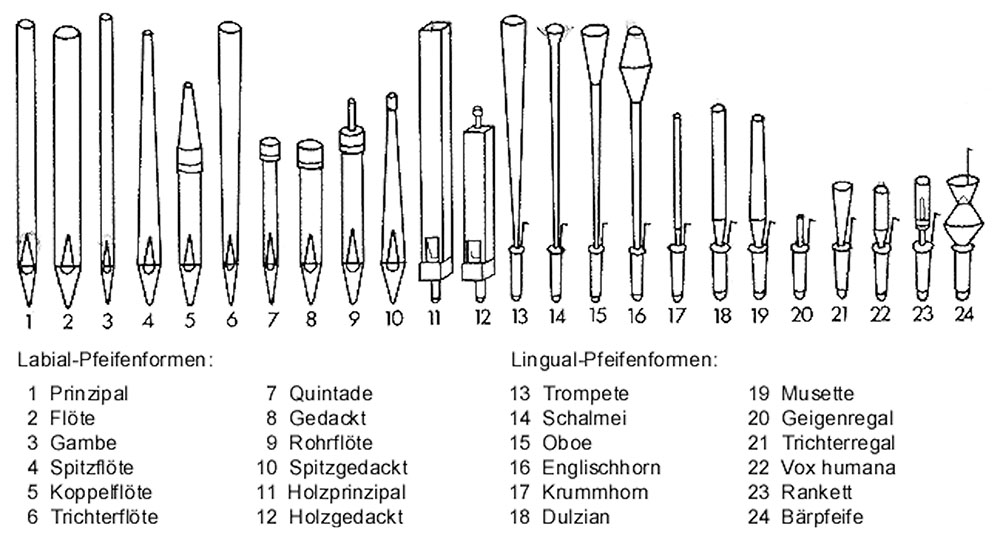
In the early days, mechanical instruments were used to imitate the sounds of natural instruments. Stops with names like ‘flute,’ ‘oboe,’ and ‘trumpet’ can already be found on church organs. Electronic means were also used to replicate these familiar instruments.
In the 1950s, the Hammond organ was the first instrument on the market that could produce the iconic Hammond organ sound we know today.
Klaus Wunderlich provided early tips on registering the Hammond organ, in which he described how to register a clarinet or a trumpet using the famous Hammond drawbars system. The period from 1950 to around 1990 was the era of the electronic organ. So, what happened that today these instruments only have a shadow of their former presence?
People’s enthusiasm was palpable with every step forward in development. Each new sound was celebrated because it sounded better than what had been available until then. This development can be beautifully traced in Klaus Wunderlich’s records.
Alongside the evolution of sound, more and more electronic playing aids (drums and automatic accompaniment) were introduced. This allowed instruments to be made smaller and more portable. The market for such devices seemed almost limitless. They evolved from large, expensive models to small, affordable ones, also in terms of sound quality. Some may remember the Casio mini keyboards of the '70s. Klaus has said on many occasions that "I don't use computers to make music; a computer has no soul."
With the advent of digital technology, it became possible to produce every conceivable sound in the highest quality on a keyboard using sampling. As a result, it is now possible to create instruments that can do almost anything. This can be wonderfully illustrated by the development of the sound of the piano on organs. took just 15 years from the first piano on the Wersi W248S and other products to the Wersi Pianostar. Today, a piano on an organ sounds like a real piano.
Here is an example of the development of the piano sound on an organ in 100 seconds:
- Wersi Piano, W248S, ca. 1975 (0:00 - 0:25)
- Wersi Piano, Helios, ca. 1985 (0:25 - 0:50)
- Wersi Piano, Spectra, ca. 1995 (0:50 - 1:15)
- Physical modeling piano, Moddart Pianoteq 6, ca. 2020 (1:15 - 1:40)
Unfortunately, the quality of the music has been somewhat neglected. Today, it hardly matters whether a piece of music is accompanied by a live drummer or whether this 'job' is done by electronics. The same applies to many other instruments today.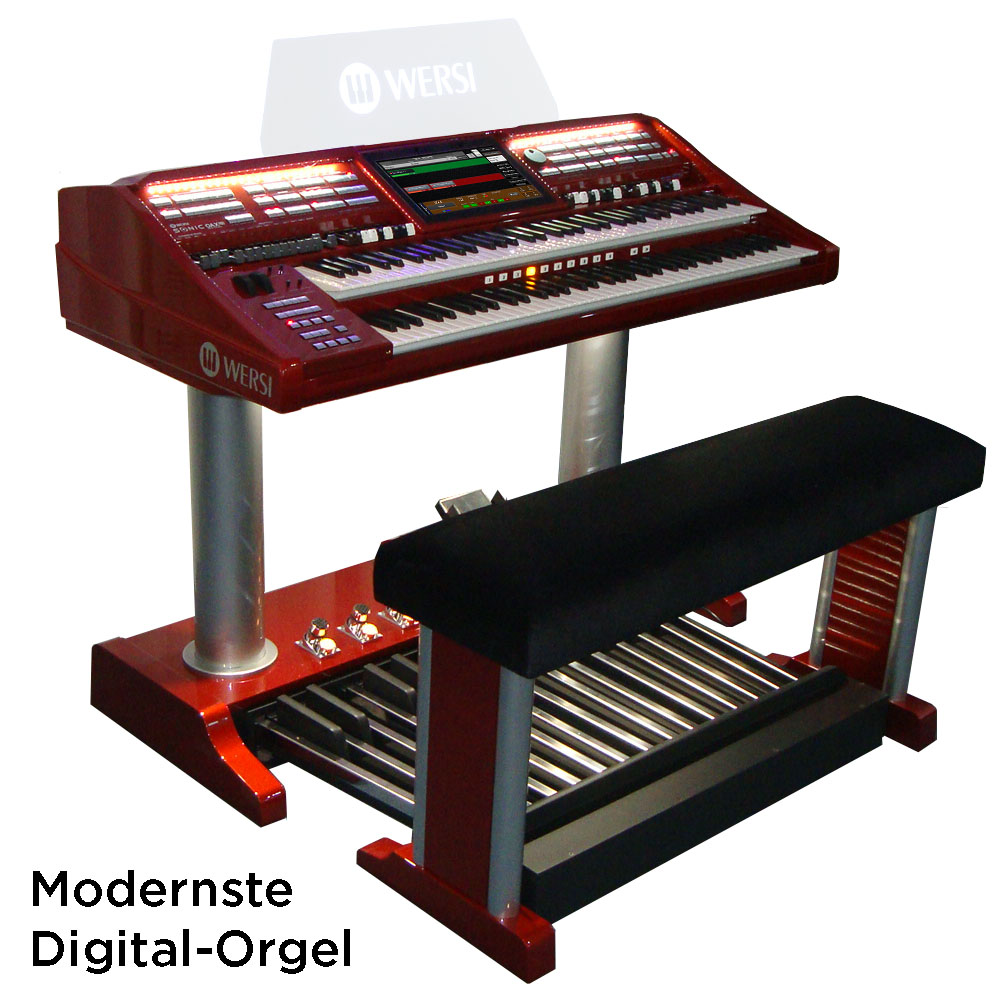
The organ, as Klaus Wunderlich played it, can hardly exist today because the tonal identity of the organ no longer remains. When a recording sounds identical to a real orchestra, you might as well stick with the original. What remains is the essence of the organ sound: the Hammond sound. This is as characteristic today as it was then and is still popular with fans. Unfortunately, everything else has become largely uninteresting. It's a bit painful to think of the organ today as almost exclusively a museum piece. How should one register a flute or trumpet, for example, on an organ today? The listener can no longer distinguish the result from the original.
«The music of Klaus Wunderlich is 'contemporary history»