


Klaus Wunderlich was always ahead of his time when it came to embracing new technology, whether pioneering stereo recordings or experimenting with innovative musical instruments. In the mid-1960s, the first commercially viable synthesizers entered the market, marking a turning point in electronic music. Inspired by Wendy Carlos' groundbreaking 1968 album Switched-On Bach, Wunderlich set out to bring the powerful Moog synthesizer into the realm of popular music.
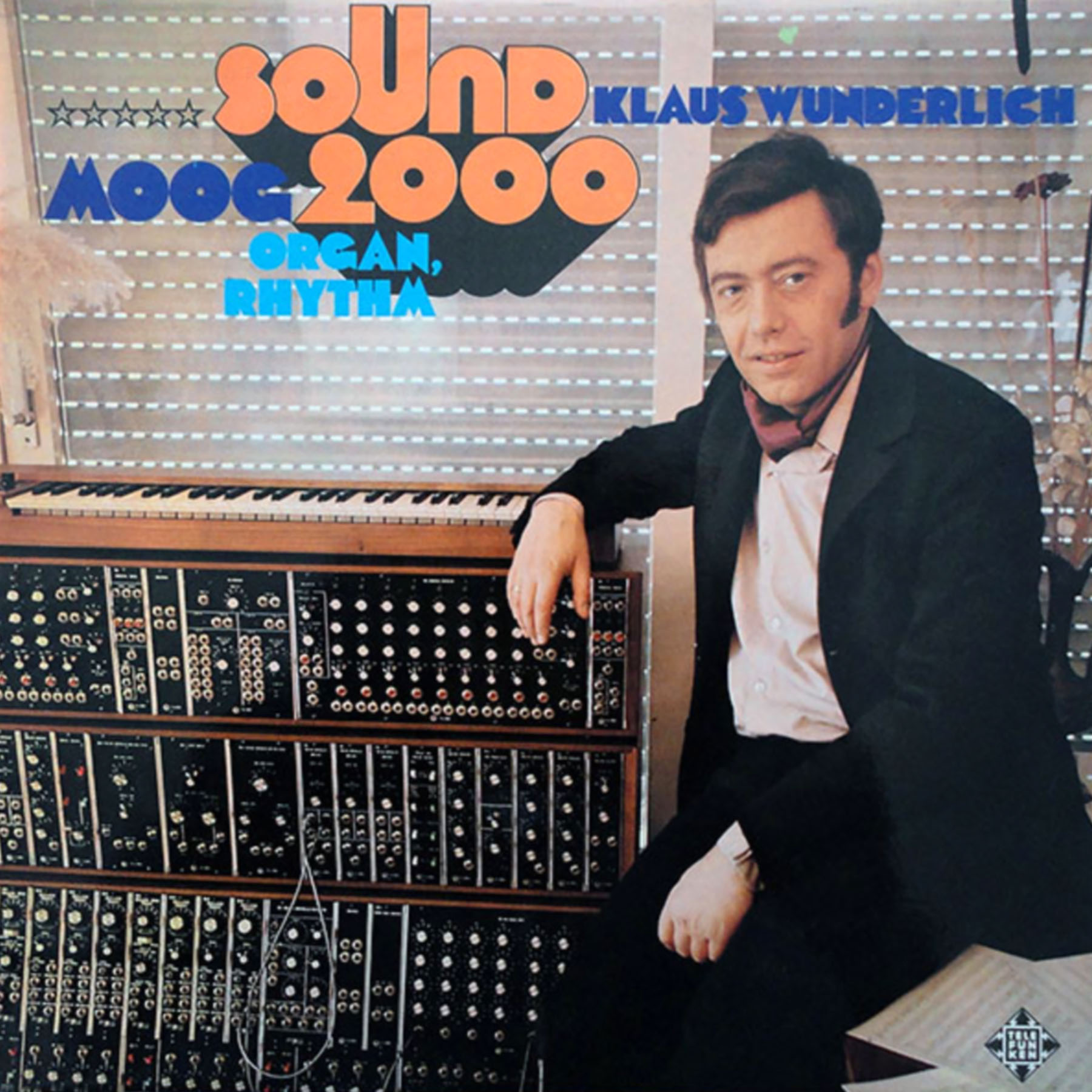
After his first attempts around 1970, Klaus worked intensively in his studio with the newly acquired Moog System 55 in 1973. That same year, the single Corn Flakes was released, featuring two tracks that were also included on the first LP Sound 2000, which followed later that year. On the back of the LP, Klaus Wunderlich wrote the following message to his fans:
 Dear Record Fans,
From time to time, as well as my Hammond Organ LP series, I would very much like to serve you with some specialities from my own studio.
First of all, I want to introduce my MOOG-Synthesizer on this LP. You certainly know the sound of the synthesizer from the number "Popcorn." This instrument offers a musician and technician who likes experimenting an enormous number of possibilities, since every sound and noise can now be "synthetically" produced. Listen then to the "would-be" trombones, guitars, and strings. Let the wind tell its story in Raindrops, or imagine yourself in the underworld with the sounds of bullets, explosions, and abstract noises in Krimoogulus.
However, apart from the keyboard, a synthesizer hasn't got much in common with an organ. It demands a somewhat different manner of playing, and also only one voice can be played at a time, so that the recording has to be made using the multi-play process. On this LP we used this method for some numbers up to 12 times.
My good old organ was also able to play a little part in all this.
The only "normal" instruments on this record are: drums, tambourine, and bongos. All the others, including the bass and even the cowbells, were produced by the synthesizer.
I hope I have produced a few surprises for you! Here's wishing you lots of fun with this LP!
Dear Record Fans,
From time to time, as well as my Hammond Organ LP series, I would very much like to serve you with some specialities from my own studio.
First of all, I want to introduce my MOOG-Synthesizer on this LP. You certainly know the sound of the synthesizer from the number "Popcorn." This instrument offers a musician and technician who likes experimenting an enormous number of possibilities, since every sound and noise can now be "synthetically" produced. Listen then to the "would-be" trombones, guitars, and strings. Let the wind tell its story in Raindrops, or imagine yourself in the underworld with the sounds of bullets, explosions, and abstract noises in Krimoogulus.
However, apart from the keyboard, a synthesizer hasn't got much in common with an organ. It demands a somewhat different manner of playing, and also only one voice can be played at a time, so that the recording has to be made using the multi-play process. On this LP we used this method for some numbers up to 12 times.
My good old organ was also able to play a little part in all this.
The only "normal" instruments on this record are: drums, tambourine, and bongos. All the others, including the bass and even the cowbells, were produced by the synthesizer.
I hope I have produced a few surprises for you! Here's wishing you lots of fun with this LP!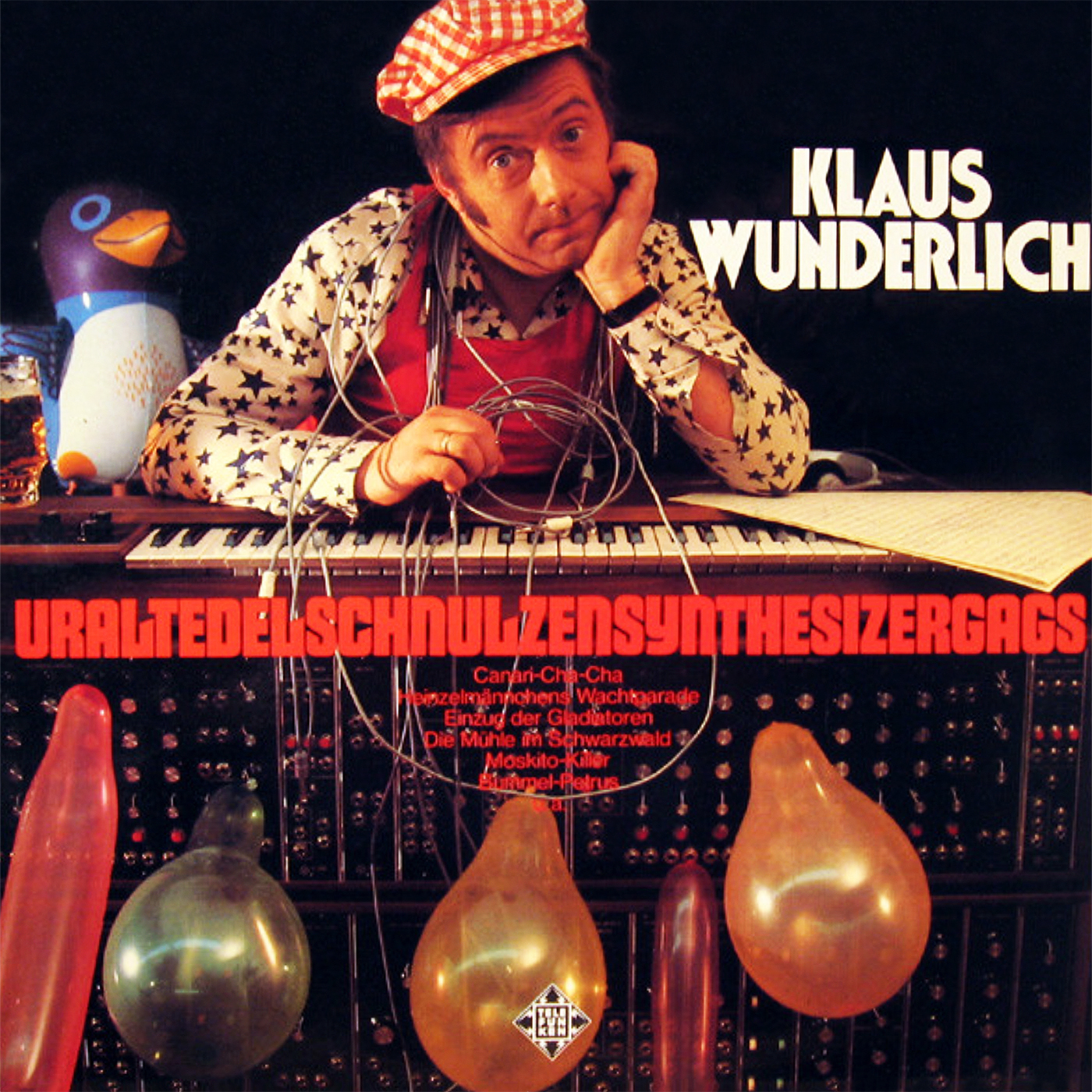 Klaus Wunderlich
With the 1974 production Uraltedelschnulzensynthesizergags, Klaus proved that it was possible to record an entire production solely with the Moog synthesizer. The tracks on this LP, released in 1974, are ones almost everyone has heard at some point. With his musicality, Wunderlich managed to program what seemed impossible and performed it with incredible painstaking detail.
He brought his full musicality and technical understanding of this new instrument into the production.
Although some of the tracks are still occasionally heard today, the work received little recognition among synthesizer enthusiasts. Purists rejected it because it was not classical music, while representatives of rock and pop showed little interest, since in their eyes it was merely light entertainment music.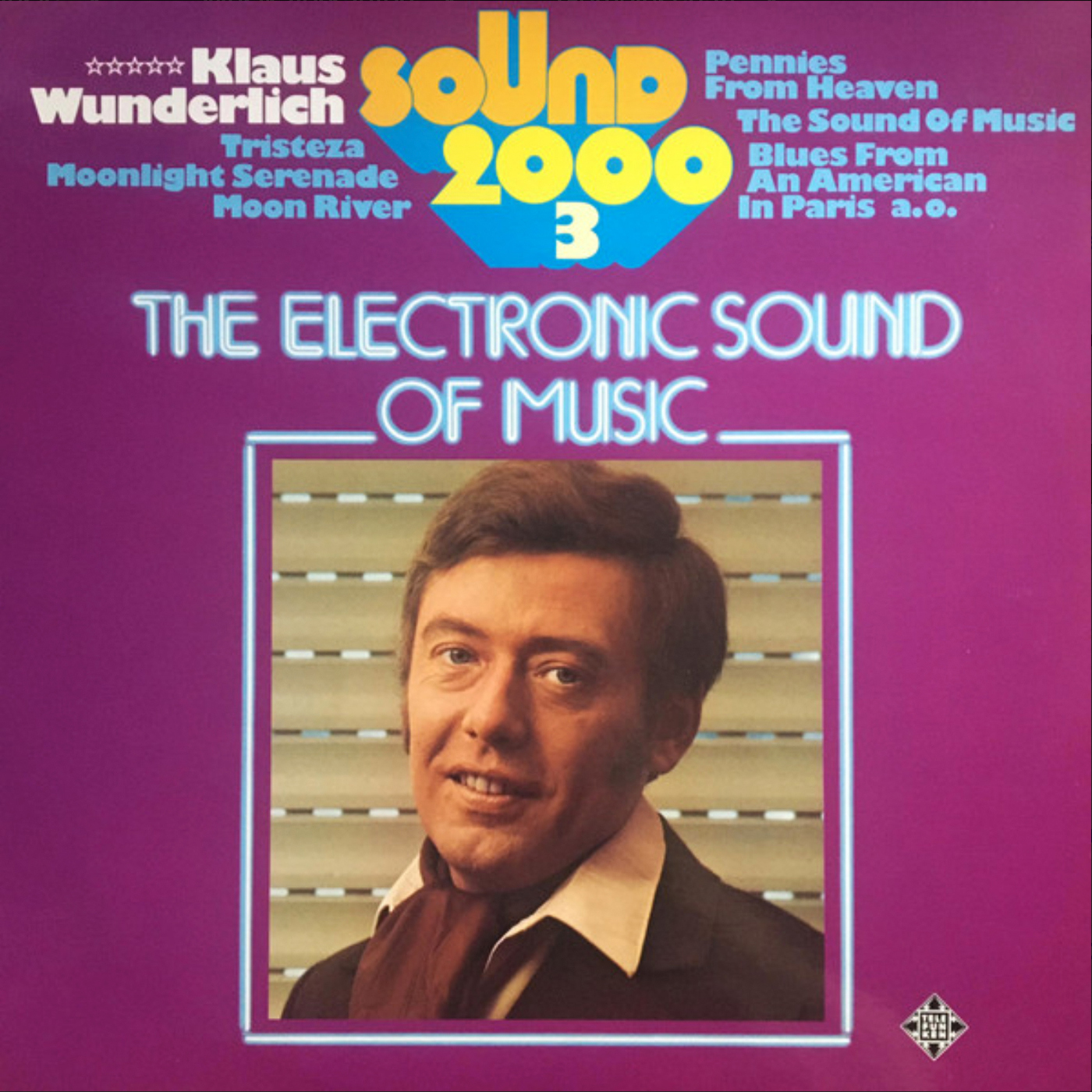 In 1975 came the last LP featuring the large Moog, titled Sound 2000 3. Here, Klaus Wunderlich once again poured all his skills into creating a work that had remained unmatched. Alongside the Moog, he also used all the organs as well as the Bechstein grand piano in his studio. Two years earlier, he had recorded Sound 2000 2, a production in which he experimented almost exclusively with his grand piano and the possibilities of his studio.
Anyone listening to these recordings today, knowing how complex such a production was at the time, quickly realizes that Klaus was greatly underestimated by the synthesizer community solely because of his image as an entertainer.
The continuous tonal development of organs, which made increasingly diverse sound colors possible, ultimately led Klaus to sell the large synthesizer. From then on, he used only the compact Minimoog, primarily as a bass instrument.
Der Minimoog 