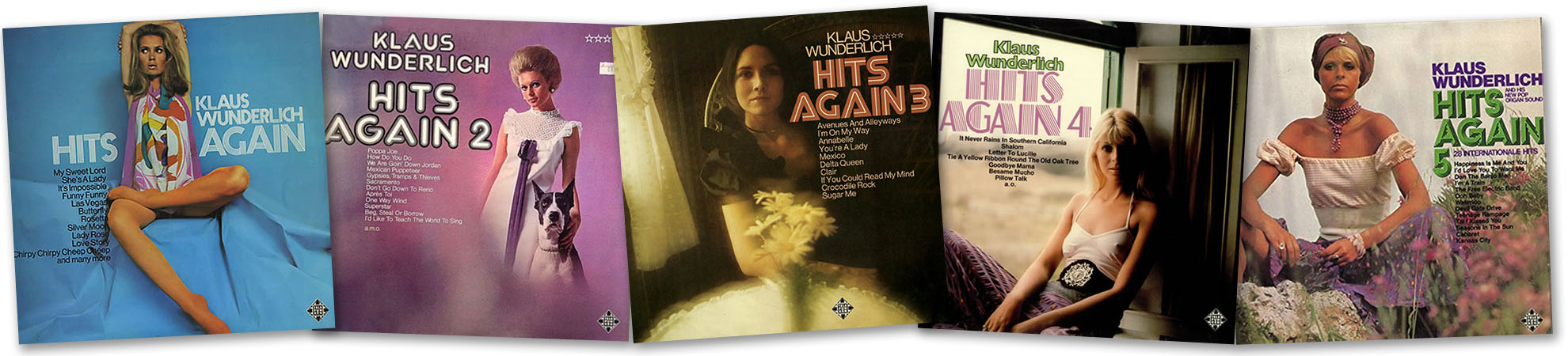
This new feature is compiled by by Alan Ashton, former BBC Radio Manchester freelance presenter and author of the out of print artist authorised Klaus Wunderlich Discography. It will be updated regularly and so do please make a habit to return to read more stories that its hoped you will find interesting commencing with:
KWAS?
 IN THE BEGINNING... When Klaus Wunderlich LPs began to become very popular it was a Mr Peter Barnett of Selecta/Decca Records (UK) a subsidiary of Telefunken Records (Germany) that suggested to Klaus that it would perhaps be a good idea for him to have a UK Fan Club. Klaus abhorred the use of the word 'Fan Club' in any form, and so it was agreed that it would be called the KLAUS WUNDERLICH APPRECIATION SOCIETY (KWAS).
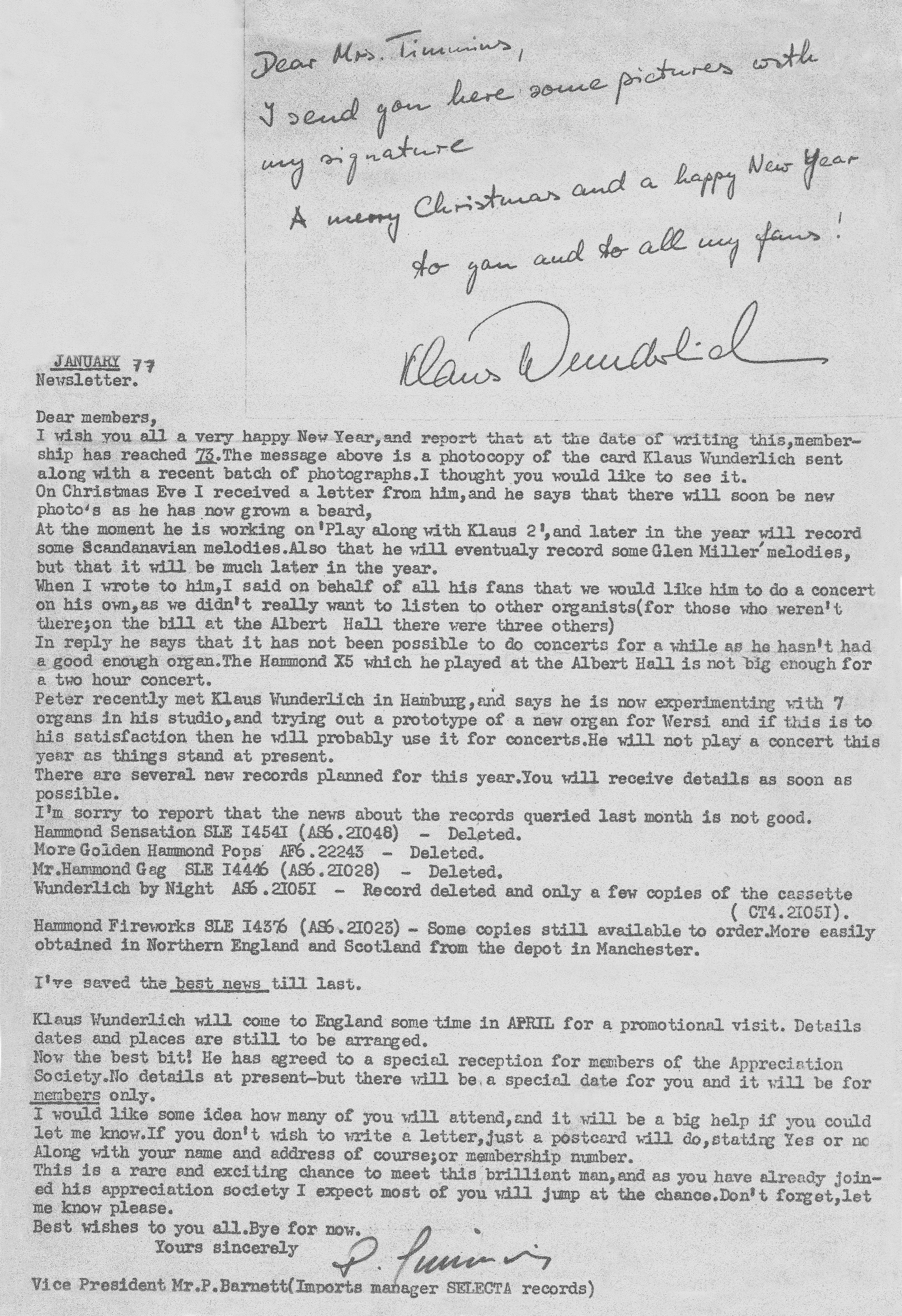
The first letter to the initial KWAS Members was sent out in 1977 and penned by Peter Barnet and to which a special message from Klaus to a Miss Dorothy Timmins was attached. This was at the suggestion of Peter Barnett who he believed might just be the ideal person to run the KWAS. Interestingly and despite his hate of the Fan Club word it was signed to his many Fans!
In the seaside Town of Blackpool in the North West of England a Miss Dorothy Timmins had purchased a copy of HAMMOND CONCERTO from a local music shop, and having just begun to play the Hammond organ was so enthralled by the recording that.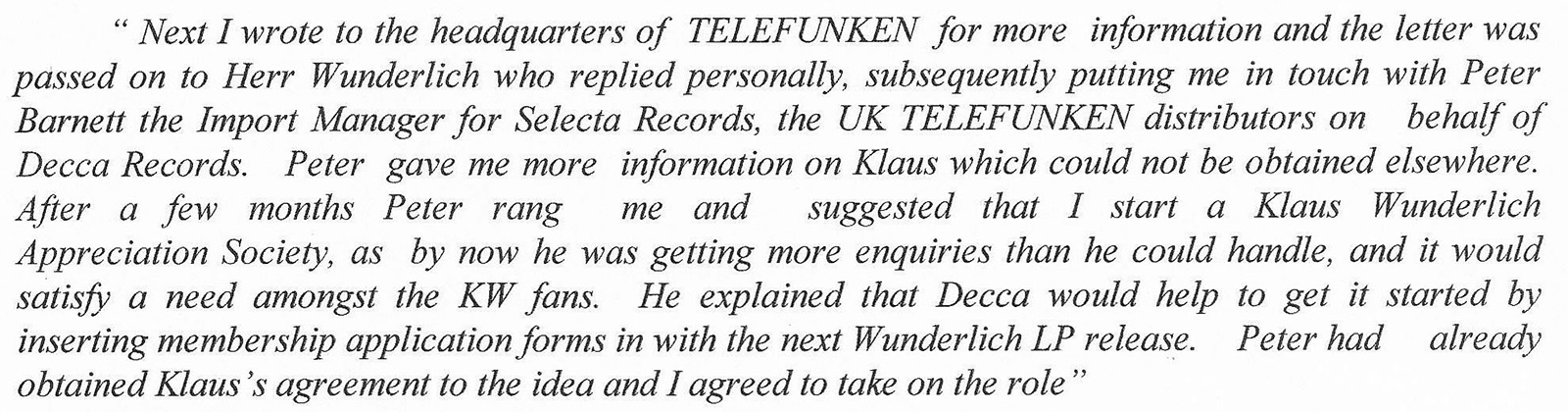
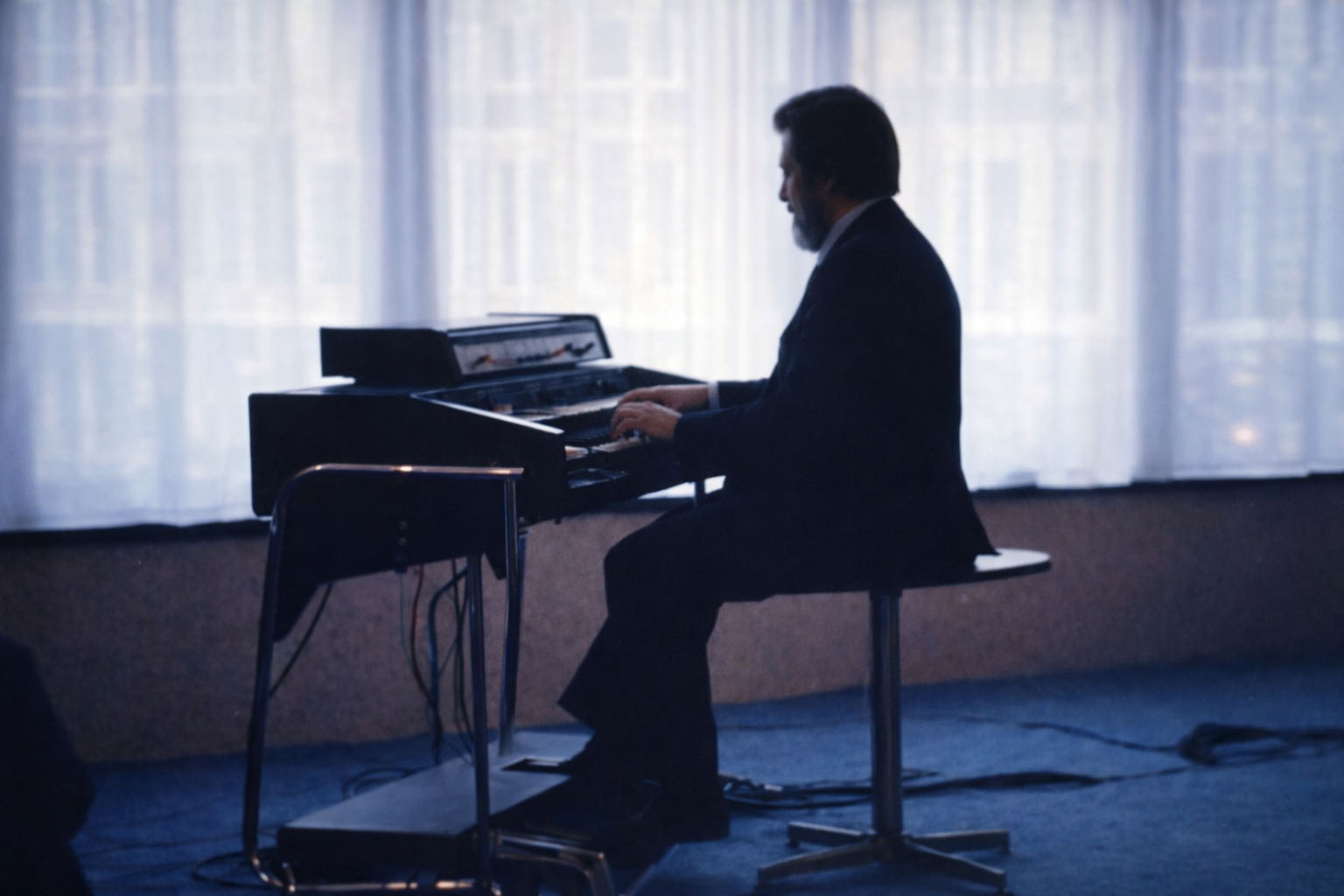
Excerpts taken on silent 8mm film can be found on You Tube and if you look carefully Klaus plays the loaned Hammond organ by sitting on a table due to the supplier failing to deliver a Hammond bench. The KWAS was now into a 3 figure membership number and that 8mm amateur film was taken at the Penta Hotel, London in April 1977 and those members who attended paid the princely sum of £7 for a buffet meal after which Klaus played an impromptu for the guests and the invited press.
By this time Dorothy Timmins was appointed as the initial UK representative for the new and burgeoning Society, a position she held until her marriage broke up and she reluctantly had to relinquish the post in late 1977, but remained a devoted lover and collector of all his music until the day that she died in October 2021.
CHRIS WAXMAN?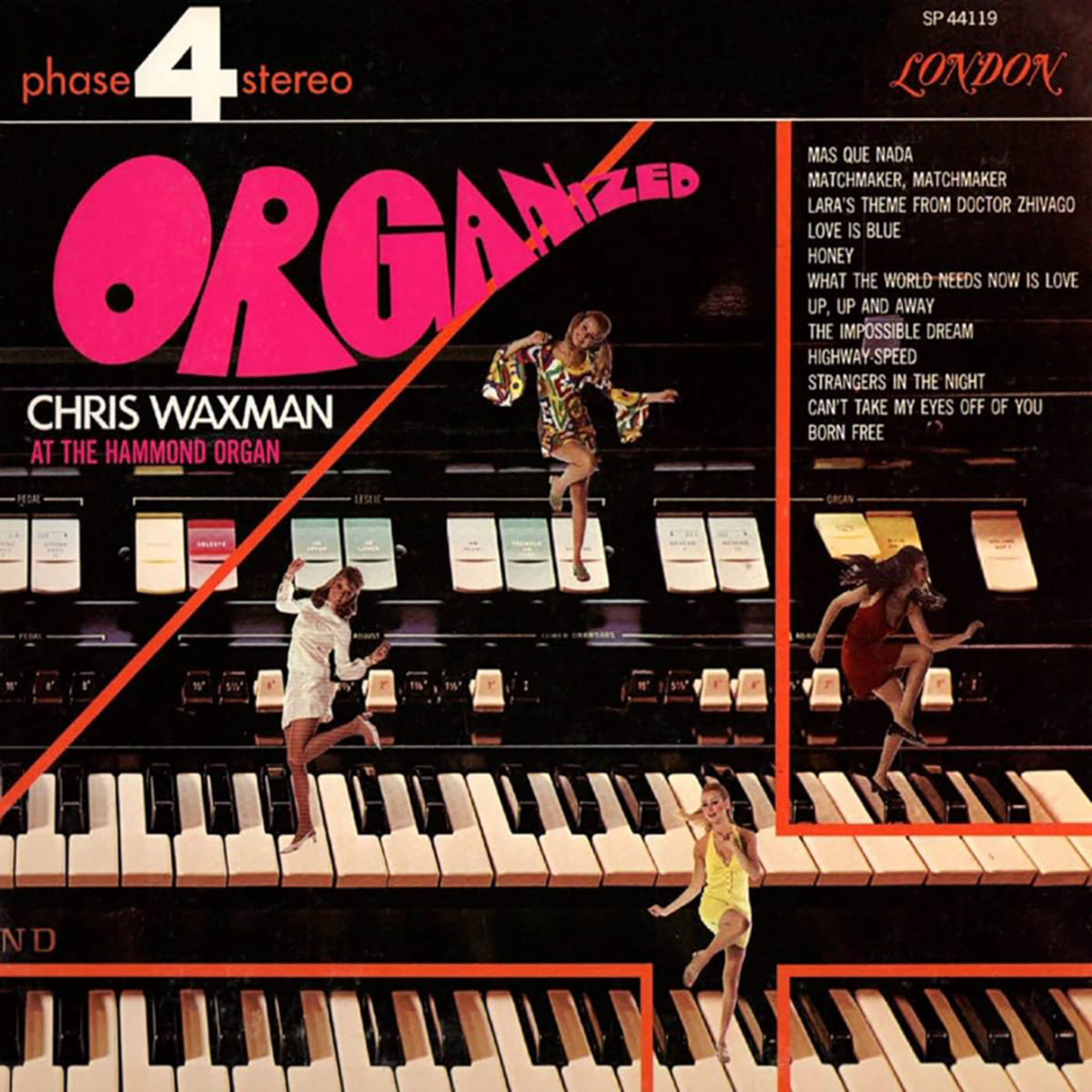 Chris Waxman. No matter how hard you search you will never find more than one initial recording by this artist. It was a Decca publicity agent who dreamed up the name for the 1968 UK Decca release of ORGANIZED but this was later re-released and retitled as HAMMOND SENSATION but this time bearing the rightful name of Klaus Wunderlich! The reason given for the initial UK release under the Chris Waxman title was due to the thought that English record collectors would not appreciate the Germanic name. One comedian insisted this was because they bombed our fish & chip shops!! This identical recording was again re-issued and retitled in 1977 under the title of THE PHASE FOUR WORLD OF KLAUS WUNDERLICH [SPA 532] with an equally raunchy cover picture designed no doubt with sales figures in mind. The thought process extended to completely omitting any mention of the instrument or the artist, perhaps under the assumption that all buyers knew who Klaus Wunderlich was and what type of instrument he played!
K. Lauer?
Under the name K. Lauer, Klaus Wunderlich released a considerable number of compositions without using his own name. The pseudonym is a playful variation of the German word “Kalauer” (a pun or corny joke), based on the pronunciation of the letter K as “kah” in German. It is likely that Wunderlich chose this name deliberately to express his inner comedian and his subtle sense of humor.
At first glance rather inconspicuous, he nevertheless placed a whole series of – in some cases very remarkable – compositions under this name at various points throughout his body of work.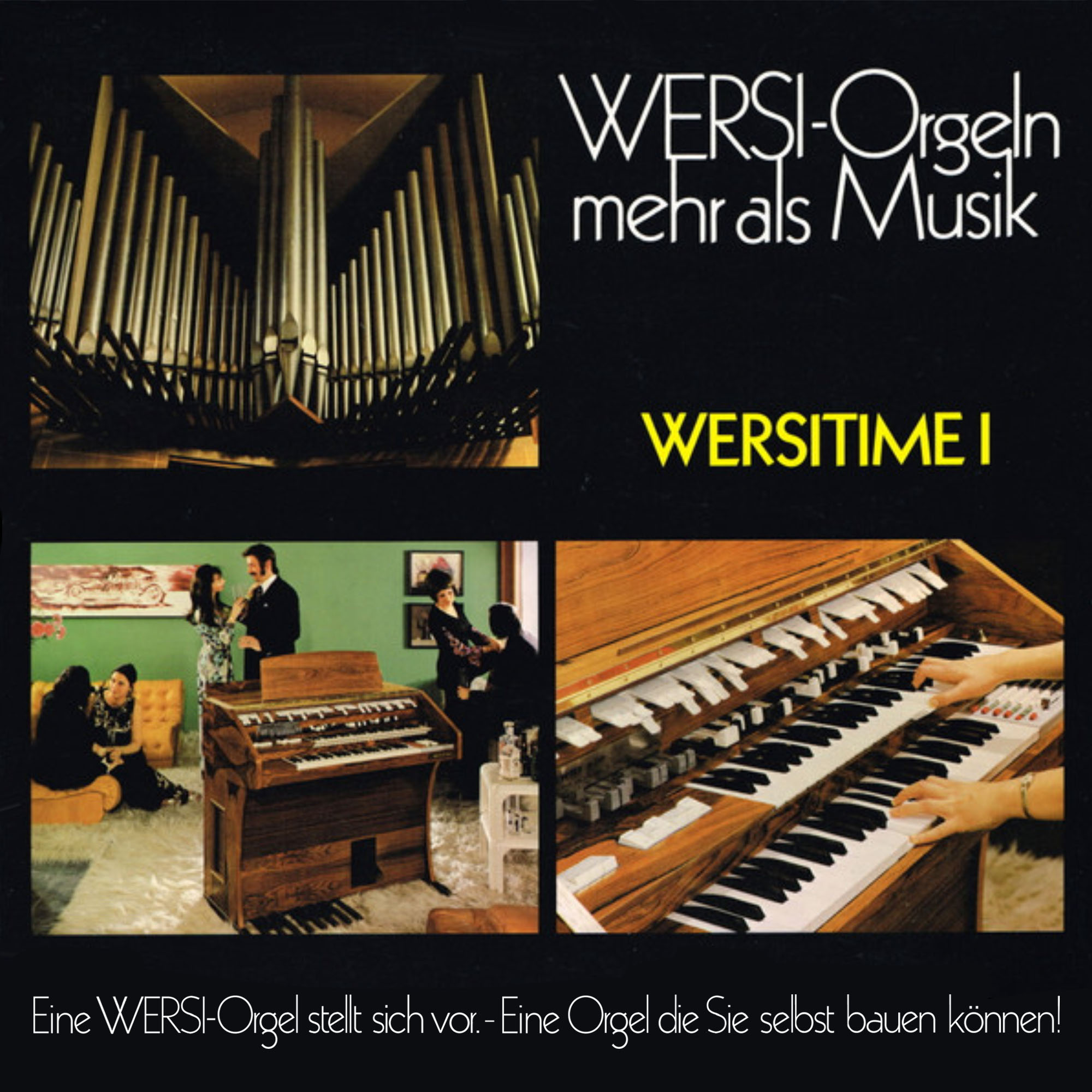 Of particular note is an overture he composed in 1973 especially for a record production commissioned by the company Wersi. The Wersi organ W248S was considered the progenitor of later Wersi instruments, and Klaus Wunderlich had even assembled such an organ himself.
What he created with the overture “Wersirama” is difficult to put into words: a work that does not need to shy away from classical overtures. In it, Wunderlich employed every possible musical and technical capability of the new instrument, shaping a composition that stands out not only musically, but is also astonishing when viewed in the context of the technology available at the time. Nothing even remotely comparable was achieved either before or after him.
Here is the overture “Wersirama” by K. Lauer.
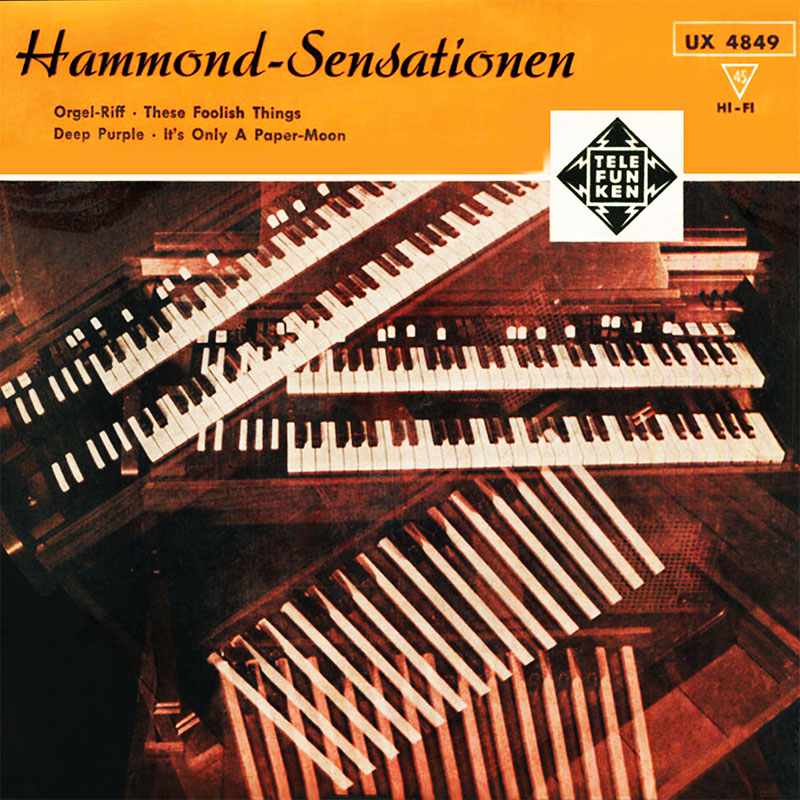 Klaus Wunderlich’s very first record, “Hammond Sensations”, was released in 1958 and was an EP (Extended Play) record, which could accommodate a total of four tracks. In order to make this possible, a process that was new at the time was used: the so-called “Füllschrift” (Filler Record) process, in which the groove on the record was adapted to the content.
Füllschrift is a process developed by Eduard Rhein that significantly extended the playing time of records by means of variable groove spacing. By dynamically adjusting the groove width and spacing to the audio signal, space was saved, which enabled the widespread adoption of long-playing records (LPs). On record labels, this process was often promoted by the wording “Füllschrift” or a corresponding symbol.
Here is an audio document from this record, which still had to be played at 45 rpm (excerpt).
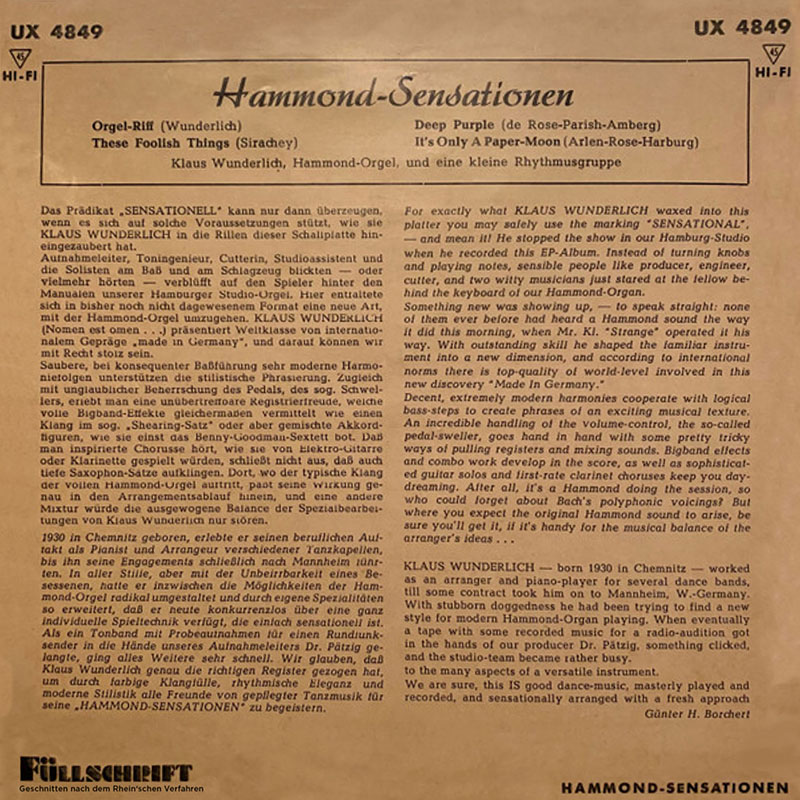
Here is the complete text that was printed on the back cover:
For exactly what KLAUS WUNDERLICH waxed into this platter you may safely use the marking "SENSATIONAL", - and mean it. He stopped the show in our Hamburg-Studio when he recorded this EP-Album. Instead of turning knobs and playing notes, sensible people like producer, engineer, cutter, and two willy musicians just stared at the fellow behind the keyboard of our Hammond-Organ.
Something new was showing up, - to speak straight: none of them ever before had heard a Hammond sound the way it did this morning, when Mr. KI. *Strange" operated it his way. With outstanding skill he shaped the familiar instrument into a new dimension, and according to international norms there is top-quality of world-level involved in this new discovery "Made In Germany." Decent, extremely modern harmonies cooperate with logical bass-steps to create phrases of an exciting musical texture.
An incredible handling of the volume-control, the so-called pedal-sweller, goes hand in hand with some pretty tricky ways of pulling registers and mixing sounds. Bigband effects and combo work develop in the score, as well as sophisticated guitar solos and first-rate clarinet choruses keep you daydreaming. After all, it's a Hammond doing the session, so who could forget about Bach's polyphonic voicings? But where you expect the original Hammond sound to arise, be sure you'll get it, if it's handy for the musical balance of the arranger's ideas ...
KLAUS WUNDERLICH - born 1930 in Chemnitz - worked as an arranger and piano-player for several dance bands, till some contract took him on to Mannheim, W. Germany.
With stubborn doggedness he had been trying to find a new style for modern Hammond-Organ playing. When eventually a tape with some recorded music for a radio-audition got in the hands of our producer Dr. Pätzig, something clicked, and the studio-team became rather busy.
to the many aspects of a versatile instrument.
We are sure, this IS good dance-music, masterly played and recorded, and sensationally arranged with a fresh approach.
Günter H. Borchert
(Very little is known about Günther H. Borchert. At the time, he was a senior Teldec studio employee who, among other things, wrote various texts for record sleeves.)
You can find further interesting information about Klaus Wunderlich’s record productions - here